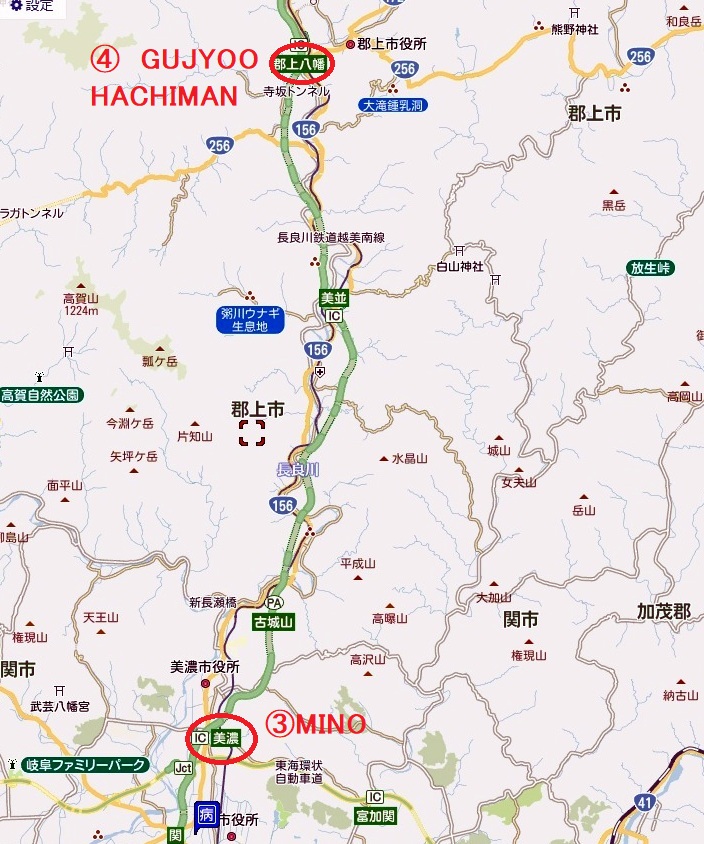
④Gujo Hachiman
Gujo Hachiman is a town located in the northern part of Gifu Prefecture, the center of the Gujo region. In the Edo period, the Gujo clan was established here, and even today, the old townscape and cultural properties remain. Below are some of the features of Gujo Hachiman.
1.old town Gujo Hachiman retains the townscape that was built in the Edo period. Narrow alleys, wooden storehouses, and old merchant houses line the streets, preserving an old-fashioned atmosphere. In particular, Shirakawa-go, which used to be a post town, is designated as an Important Cultural Property of Japan, and is visited by many tourists.
2.Gujo dance Gujo Odori is the representative festival of Gujo Hachiman. This dance, which is held in July every year, is designated as an important intangible folk cultural asset of the country and is famous nationwide. Dancers wear flashy costumes and perform vivid dances.
3.Clear stream, Hida River The Hida River, which flows through Gujo Hachiman, is a clear stream blessed with rich nature. Along the river, there is a walking path with beautiful cherry blossoms and autumn leaves, making it an ideal place for nature walks and picnics.
4.Food culture Gujo Hachiman’s food culture is characterized by many dishes that make use of locally-sourced ingredients, and Gujo Udon is especially famous. The thin noodles and light soup stock go well together, so please try it when you visit Gujo Hachiman.
Gujo Hachiman has many attractions such as old townscapes, festivals, and nature. It is a town where you can feel the history and culture of Japan, so it is worth visiting.
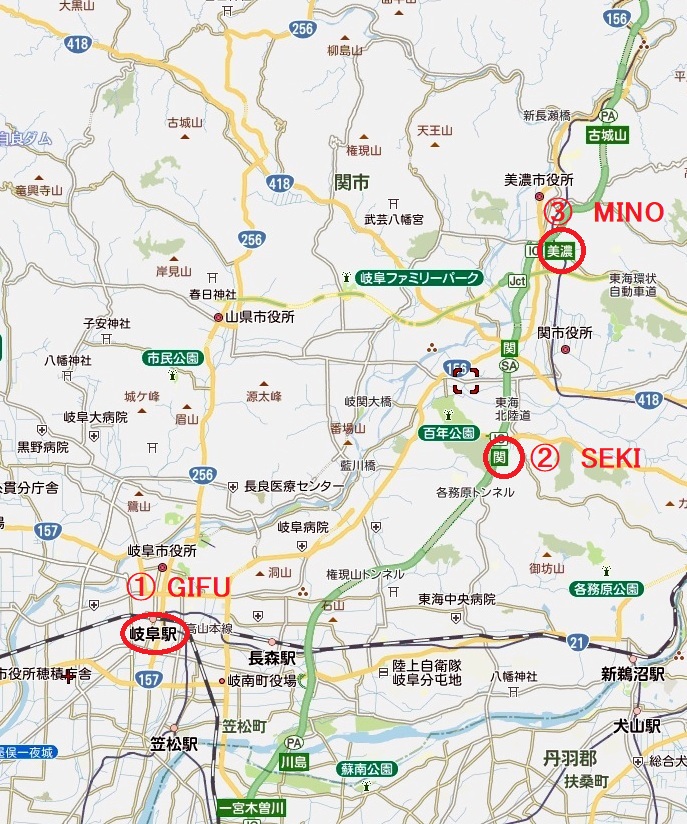
③Mino
Mino ware Mino City is famous for producing Mino ware. Mino ware is a type of pottery that has been handed down since ancient times, and is characterized by its unique black and reddish brown colors and texture. There are Mino ware potteries and pottery markets, and many people visit.
1.Mino ware Mino City is famous for producing Mino ware. Mino ware is a type of pottery that has been handed down since ancient times, and is characterized by its unique black and reddish brown colors and texture. There are Mino ware potteries and pottery markets, and many people visit.
2.Mino Japanese paper Mino City is also known as the production area of Mino Washi. Mino Washi is a type of Japanese paper made by hand using fine fibers, and is highly acclaimed around the world. There is also a facility where you can observe the manufacturing process of Mino Washi.
3.Minokamo City Minokamo City, which is located next to Mino City, once prospered as a textile production area. Traditional textiles are still made today, and there are textile workshops and museums.
4.castle town Mino City has a historical castle town. Typical examples include the Minokamo Castle Ruins and the Iwamura Town Museum of History and Folklore, which is designated as an Important Cultural Property of Japan.
5.Nature Mino City is also an area where a lot of nature has been preserved. In particular, mountains such as Mt. Karuga and Mt. Kaicho are ideal places for climbing and hiking.
Mino City has attractive tourist spots such as traditional industries, nature, and historical castle towns. You can visit workshops of Mino ware and Mino washi paper, and enjoy nature. In addition, Mino City is located in the center of Gifu Prefecture, so it has good access to surrounding tourist spots.
②Seki City
Seki City is located in the central part of Gifu Prefecture and is one of the central cities of the Mino region. The characteristics of Seki City are introduced below.
1.Battle of Sekigahara Seki City is known as the place where the famous battle “Battle of Sekigahara” took place during the Warring States period. In Seki City, there is a museum that reproduces the battle of Sekigahara and the Sekigahara Battlefield Park. There is also the Sekigahara Cemetery, where warlords who died in battle are enshrined, so it is a spot worth visiting for history buffs.
2. Castle tour
There are many historical castle ruins around Seki City. Especially famous are the Unuma Castle Ruins and the Otani Castle Ruins, both of which are designated historic sites of Gifu Prefecture. The Unuma Castle Ruins has the largest area in Gifu Prefecture, and remains from ancient times to the Middle Ages. Since the Odani Castle Ruins does not have a castle tower, although it is relatively small, there are many existing buildings, and you can take a walk around the castle ruins.
3. event Seki City hosts many events throughout the year. Among them, the “Ten Days of Seki” held every September is one of the representative festivals of Seki City, and you can see performances such as traditional floats and musical accompaniment.
4.industry Metal processing and machine manufacturing industries are thriving in Seki City, and many companies have moved into the area. In addition, in the southern part of Seki City, there is a large commercial facility “AEON MALL Seki” where you can enjoy shopping and dining.
Seki City has various attractions such as historical castle ruins, battle museums, festivals, industrial and commercial facilities. In addition, Seki City has good access even within Gifu Prefecture and is connected to nearby tourist spots, so it is recommended as a tourist destination.
① Gifu City
Gifu City is the prefectural capital of Gifu Prefecture and one of the central cities of the Chubu region. Below are some of the features of Gifu City.
1.historic townscape Gifu City has a historic townscape that has continued since the Edo period. Among them, “Gifu Yanagase Shopping Street”, which spreads along the “Nagara River” that flows through Gifu City, is a spot loved by many tourists. Old-fashioned wooden buildings and kurazukuri buildings stand side by side, and you can enjoy the old townscape.
2.galleries and museums Gifu City has many art galleries and museums. Gifu Prefectural Museum of Art and Gifu City Museum are especially famous. The Gifu Prefectural Museum of Art has exhibits of Japanese paintings, Western paintings, and sculptures, making it a must-see spot for art fans. At the Gifu City Museum, you can learn about the history and culture of Gifu City, and it is a facility that both children and adults can enjoy.
3.Specialty dish Gifu City has a specialty dish that is loved by the locals. A representative dish is chicken nanban. It is a dish made by deep-frying chicken and tossing it with a special sauce, and is characterized by its sweet and salty taste. “Gifu Miso” and “Miso Katsu” are also famous. Gifu miso is a salty-sweet condiment made by cooking miso and sugar. Miso cutlet is pork that has been coated with miso and deep-fried in bread crumbs.
Sightseeing spots rich in nature Around Gifu City, there are many sightseeing spots rich in nature.